Starting a business is an exciting opportunity, but one of the first decisions entrepreneurs face is whether to buy a franchise or build a business from scratch. Both options offer the potential for financial independence and long-term growth, but they differ significantly in terms of risk, investment, support, and day-to-day operations.
Buying a franchise allows entrepreneurs to operate under an established brand and follow an existing business model. Starting from scratch, on the other hand, gives business owners the freedom to create their own brand, products, and operating systems. Understanding the main benefits of each approach can help prospective business owners choose the option that best suits their goals, experience, and financial circumstances.
What Is the Difference Between Buying a Franchise and Starting From Scratch?
Buying a franchise involves purchasing the right to operate a business using an established company’s brand, systems, and intellectual property. The franchisee typically pays an initial franchise fee and ongoing royalties in exchange for these rights and any support included in the agreement.
Starting from scratch means developing an independent business without relying on an existing franchise system. The owner is responsible for creating the brand, developing products or services, establishing operating procedures, and building a customer base.
While both approaches require planning, investment, and effective management, franchising provides a structured starting point, whereas an independent business offers greater control over how the company develops.
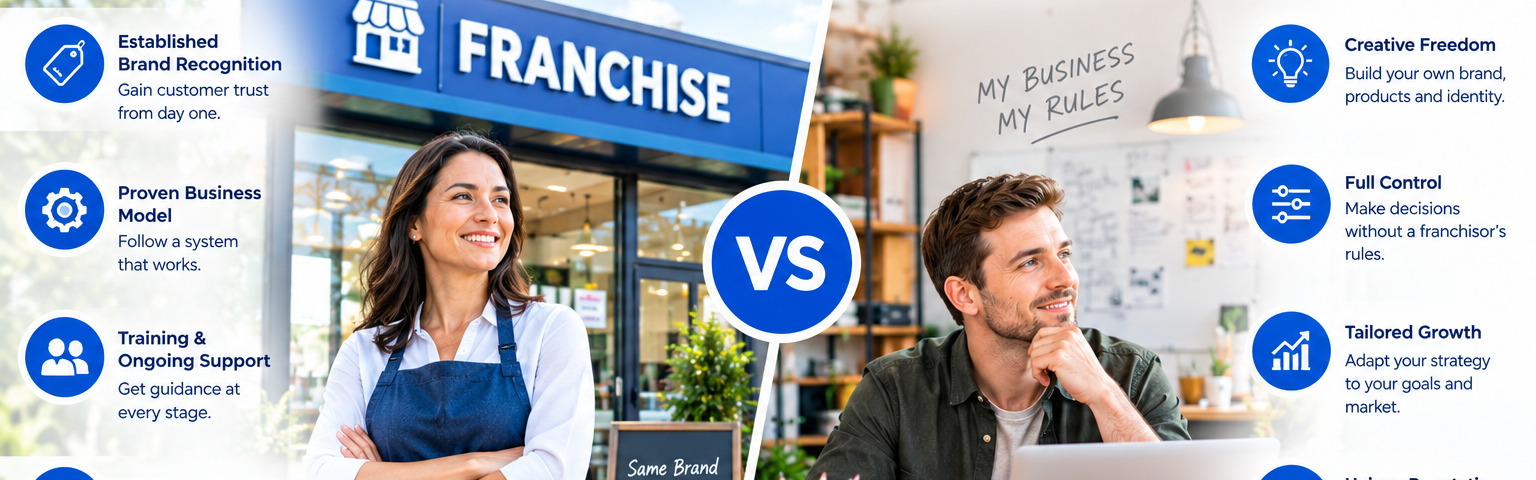
Established Brand Recognition
One of the main benefits of buying a franchise is access to an established brand. Customers may already recognise the business name, understand its products or services, and have confidence in its reputation.
This recognition can make attracting customers easier than launching an unfamiliar business. Franchisees may also benefit from national advertising campaigns and consistent branding across multiple locations.
By comparison, entrepreneurs starting from scratch must invest time and money into building awareness, establishing credibility, and earning customer trust. Although independent businesses can develop strong reputations, this process may take considerable effort.
A Proven Business Model
Franchises typically operate using established systems and procedures that have been developed and refined over time. These may cover marketing, sales, customer service, staff training, inventory management, and daily operations.
Following an existing business model can help franchisees understand how to run their businesses and avoid some common mistakes associated with launching a new venture.
Independent business owners have the freedom to develop their own systems, but they must often test different approaches before identifying what works. This flexibility can be valuable, although it may involve additional time, experimentation, and financial risk.
Training and Ongoing Support
Another significant advantage of franchising is the support that may be available from the franchisor. Depending on the agreement, this can include initial training, operational guidance, marketing materials, supplier relationships, and ongoing business advice.
This support can be particularly helpful for first-time entrepreneurs who have limited experience managing a business.
When starting from scratch, owners must usually develop their knowledge independently or pay external professionals for assistance. Although independent business owners can choose their own advisers and training resources, they are generally responsible for identifying and securing the support they need.
Supplier Relationships and Purchasing Power
Established franchise networks may benefit from negotiated supplier agreements, centralised purchasing, and established distribution arrangements. These relationships can help franchisees access approved products, equipment, and services through an existing supply chain.
Depending on the franchise, purchasing arrangements may improve consistency and potentially reduce certain costs.
Independent businesses must establish their own supplier relationships and negotiate their own terms. However, they have greater freedom to select suppliers, compare alternatives, and change purchasing arrangements as their needs evolve.
Greater Independence When Starting From Scratch
Although franchising offers several advantages, starting an independent business provides greater creative and operational freedom. Owners can choose their business name, develop their own products, set their pricing strategies, and adapt their operations without needing to follow a franchisor’s established rules.
Franchisees, by contrast, must comply with the terms of their franchise agreement and any applicable operating standards. They also need to account for franchise fees and royalties when assessing profitability.
For entrepreneurs who value independence, innovation, and complete control over their business decisions, starting from scratch may be the more suitable option.
Conclusion
Buying a franchise and starting a business from scratch both offer opportunities for entrepreneurship, but each approach comes with different advantages and challenges. Franchising can provide established brand recognition, a proven business model, training, and access to existing supplier relationships. Starting from scratch offers greater independence, creative control, and freedom to develop a unique business.
The right choice depends on an entrepreneur’s budget, experience, risk tolerance, and long-term ambitions. Before making a decision, prospective business owners should carefully evaluate startup costs, ongoing expenses, market demand, and their preferred level of independence.
By comparing both options, entrepreneurs can choose a business approach that aligns with their resources and provides a strong foundation for sustainable growth.